Action Camera for Motorbike UK: POV Setup, Settings and Picks
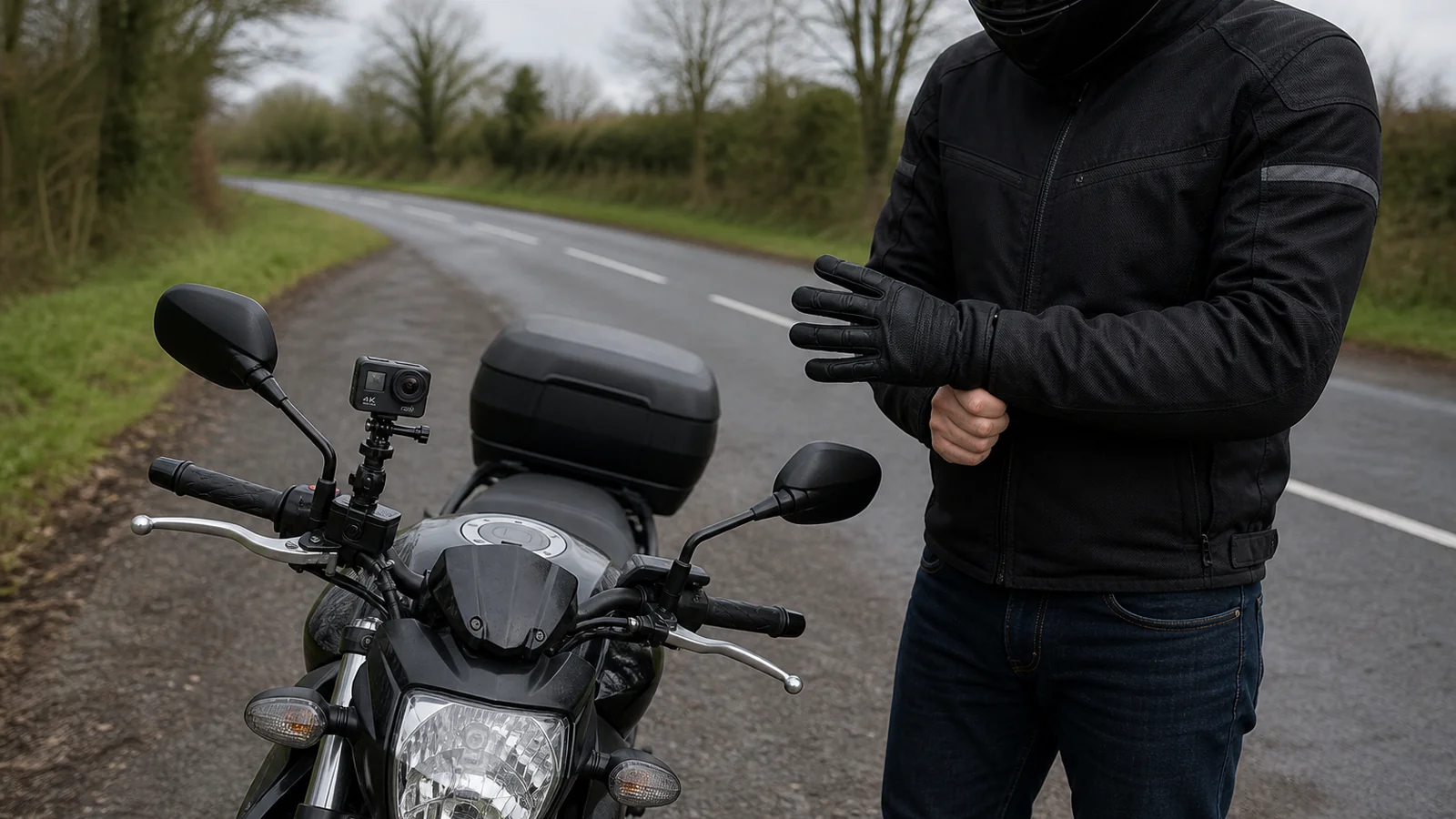
Searching for an action camera for motorbike riding in the UK usually means one thing: dependable POV footage for safety, insurance evidence or weekend vlogs — without spending GoPro Hero money on a camera that lives in a drawer after the first month.
UK forum threads show a pattern: casual riders want affordable kit, clear 1080p or 4K, easy mounting, and enough battery for a two-hour run. This guide covers mount choices, realistic settings, weather protection and why the G200R is a strong fit for British roads.
What motorbike riders actually need from an action camera
Unlike ski or dive use, motorbike filming prioritises number-plate readability, stable horizon lines and quick startup. You are not chasing cinematic colour grades — you want proof if someone cuts you up on the M25 or a blind corner in the Lakes.
Must-haves for UK riders:
- Wide angle without extreme fisheye distortion on plates
- 1080p/30 or 4K/30 with stabilisation
- Helmet or bar mount included in the box
- Loop recording and date stamp
- Battery for cold mornings
Mount placement for UK bikes
Helmet chin — Best for capturing what the rider sees; popular on Reddit UK motorbike threads. Use a damped mount on rough chip-seal roads.
Tank or fairing — Less vibration than helmet, but fixed angle misses head turns.
Rear-facing mount — Optional second camera for overtakes; most beginners start with one forward-facing unit.
The G200R bundle includes helmet mounts, bicycle stands and clips — enough to experiment before buying extra arms.
Settings that work on British roads
Riders often over-shoot ultra-high frame rates and fill storage before the pub stop. Start with 1080p at 30fps for smooth motion and manageable file sizes. Move to 4K/30 when you want crop room in editing.
Turn on electronic stabilisation, disable unnecessary Wi-Fi while riding to save power, and pre-format your microSD card in-camera. If you use the bundled remote, tuck it in a jacket pocket for one-press record at lights.
Weather, salt and the waterproof case
British riding means rain, grit and coastal salt. The included 30m-rated housing protects against persistent drizzle and hose-down cleaning after winter salt. Rinse latches after seaside runs in Cornwall or Antrim — corrosion kills cheap mounts faster than crashes.
Audio, heat and long sessions
Wind noise overwhelms built-in mics at motorway speeds — normal for budget action cameras. For vlogging at lower speeds, the onboard mic is acceptable. Some riders add external mics for track days; that is optional for dashcam-style use.
Action cameras can run warm when recording 4K continuously. Stop recording at fuel breaks and avoid leaving the unit in direct sun on a parked bike. The G200R bundle includes one 900mAh battery, so plan the route around its stated 1080p reference runtime of about 90 minutes.
G200R specs relevant to motorbike use
From the official product listing on this site:
- 4K/30fps and 1080p/30fps video
- 16MP stills
- 2.0-inch IPS HD non-touch screen with physical controls
- Supplied waterproof housing rated to 30m when correctly sealed
- Wi-Fi 2.4GHz for app preview and transfer
- One 900mAh battery, dual charger, remote, mounting accessories and 64GB TF card
- Price: £88.84 with free UK delivery
See the full comparison table and bundle contents on the G200R product page.
How this compares to premium alternatives
Hero-class cameras offer stronger stabilisation and ecosystem lenses, but UK riders on a budget often prefer a complete mount bundle under £100. If your goal is evidence and occasional social clips, the G200R covers the core checklist without accessory shock at checkout.
Frequently Asked Questions
Is 4K necessary for motorbike dashcam use?
Not strictly — 1080p/30fps is enough for many insurance reviews — but 4K gives crop flexibility if the plate sits at the edge of frame.
Will the camera survive M25 summer heat in a case?
Avoid continuous 4K while stationary in sun; pause recording at stops and ventilate the housing when parked.
What card should I use?
The bundle includes a 64GB TF card. Format it in the camera before first use and back up important footage before reformatting.
Insurance, evidence and what footage can prove
For the wider rules on wearing a camera — mounting law, privacy and insurer expectations — see our helmet camera UK guide. Footage supports statements after incidents but is not a guarantee of outcome. Timestamped POV video helps insurers and police reconstruct lane position and signals. Keep original files unedited until reviewed; note date, route and witnesses separately.
Dual-camera setups: worth it?
A forward helmet camera covers 90% of rider needs. Rear-facing second units help prove overtakes but add wiring and battery complexity. Start with one forward camera in the G200R bundle; add a rear unit only if you regularly ride in heavy urban filtering.
Commute vs tour: different settings
Daily commute: 1080p/30, loop on, medium stabilisation, 5-minute loops, mute wind-noisy audio.
Weekend tour: Use 4K/30 for selected scenic sections, keep clips deliberate and plan charging stops around the single 900mAh battery.
Glove-friendly controls
The G200R uses physical buttons and a 2.0-inch non-touch screen. The bundled wireless remote provides another way to start or stop recording; set it up and test it before riding.
Cleaning after winter salt
UK winter roads spray salt that corrodes mount threads. Rinse the housing and buckle weekly, dry before opening, and inspect adhesive pads monthly. A £90 camera lasts years with boring maintenance.
Related guides on this site
New to action cameras? Read our 4K action camera guide for frame-rate basics, or the GoPro alternatives guide if you are comparing brands.
Budget reality: what UK riders say online
Recent UK forum discussions highlight a common theme: riders want proof footage for close passes and risky overtakes, but do not need cinema-grade colour. An affordable bundle with mounts included beats a bare premium body that still needs £50 of accessories. That is why complete kits like the G200R — case, remote, one 900mAh battery, helmet hardware — rank highly for first-time buyers.
Frame rate vs heat on long motorway runs
Sustained 4K recording can generate heat. On long summer rides, use shorter clips or pause at services. Check recording status on the 2.0-inch screen before setting off and during safe stops.
Number-plate readability tips
Keep the lens clean, angle slightly downward toward the road plane, and avoid maximum wide distortion if the menu offers narrow modes. Plates at the edge of frame rarely survive compression — centre the lane ahead in your preview before setting off.