Action Camera Housing Mistakes: Your Camera Body Is Not Waterproof
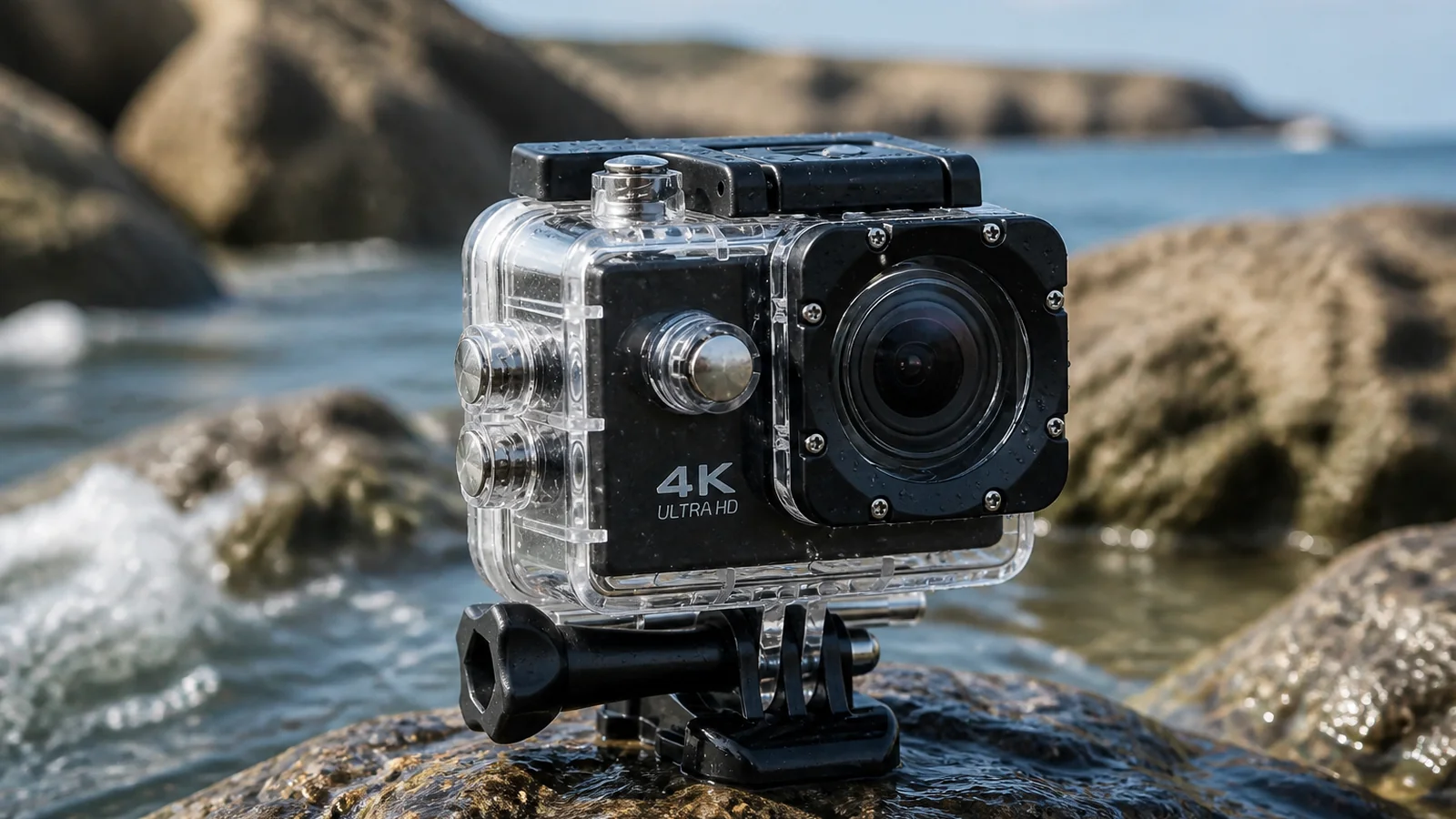
Your action camera body is not waterproof on its own. For swimming, surfing, paddling, or any real immersion, place it in the supplied waterproof housing and seal it correctly before it meets water. The same rule applies to rain, pool splash, and sea spray: treat the bare body as dry-use only.
What “housing required” actually means
On a 4K Wi-Fi action camera bundle such as the G200R, waterproofing comes from the clear housing when it is closed and sealed properly—not from the camera shell. Used that way, the housing is rated to 30 m. Open the door incorrectly, leave grit on the gasket, or film without the case, and you have left the protection path. The camera itself must not go into water alone.
That distinction matters for UK beach days, inland lakes, and holiday pools. If you only remember one rule: body dry; housing sealed; then enter the water. For a broader buyer view of waterproof options, see our waterproof camera UK guide.
Fog inside the case is not the same as a leak
Condensation on the inner face of the housing is common when you move between warm air and cold water. Mist on the glass does not automatically mean water is pouring in. A leak looks different: droplets pooling on the camera, wet ports, or water sitting in the case bottom after a short dip.
If you see fog, dry the exterior, open the housing in a clean dry place, wipe the interior and gasket, and reseal before the next session. If you see free water on the camera, stop filming, dry everything thoroughly, and do not power on until you are sure the body is dry.
Pre-water checklist (pass / fail cues)
- Inspect the gasket. Look for sand, hair, or dried salt. Pass: clean, even seal surface. Fail: debris or a twisted ring—clean before closing.
- Seat the camera fully. Pass: it sits square in the housing with the lens clear of the front glass. Fail: pinched strap, loose fit, or screen blocked by the door.
- Close and latch the door. Pass: latch engages firmly and the door sits flush. Fail: gap, soft latch, or door that springs open when you press the sides.
- Dry-land pressure check. Pass: gentle side pressure does not open the door; no obvious gap at the seal. Fail: movement at the joint—reopen, reseat, close again.
- Keep ports covered by the housing. Pass: USB and card access are inside the sealed case for water use. Fail: door open “just for charging” beside the pool.
- Plan for rain and splash too. Pass: housing on for wet weather, boat spray, and poolside. Fail: bare body in drizzle “because it is only rain.”
Common housing mistakes
- Assuming the ~61 g camera body has its own water rating and skipping the case.
- Closing the door over a damp or sandy gasket after a beach change.
- Opening the housing on a wet boat deck, then resealing with moisture trapped inside.
- Treating light fog as a reason to abandon the housing instead of drying and resealing.
- Using the camera in the case for water, then leaving the door ajar in a wet kit bag.
The G200R bundle includes a transparent waterproof housing for this job. Use it whenever water is involved; the 2.0-inch IPS HD screen remains visible through the case for framing, and it is not a touchscreen—controls stay physical, so practise latching before you enter the water.
Where this advice applies — and where it does not
This guidance fits pool sessions, sea and lake swimming within the housing’s 30 m sealed rating, kayaking splash, wet weather rides, and any trip where the camera may be dunked. It does not cover bare-body underwater use, open-housing charging beside water, or treating fog as proof the case has failed without checking for real ingress. Stay within a correctly sealed housing; do not invent a body waterproof rating the camera does not have.
FAQ
Can I film in the rain without the housing?
No. Rain, spray, and pool splash still count as water exposure. Fit and seal the housing first.
Is fog always a leak?
No. Fog is often condensation. Free water on the camera or pooled in the case is the leak signal—dry and inspect before powering on.
How deep can I go with the housing?
With the supplied housing correctly sealed, depth is rated to 30 m. Beyond careful sealing and that rating, do not push the setup.
If you need a kit that already includes the camera, clear waterproof housing, mounts, and a 64GB card, see the 4K Wi-Fi action camera bundle — a 4K Wi-Fi action camera bundle such as the G200R is built around sealed-housing water use, not a waterproof body.