Should You Leave the Waterproof Case On? Heat, Audio and Fog
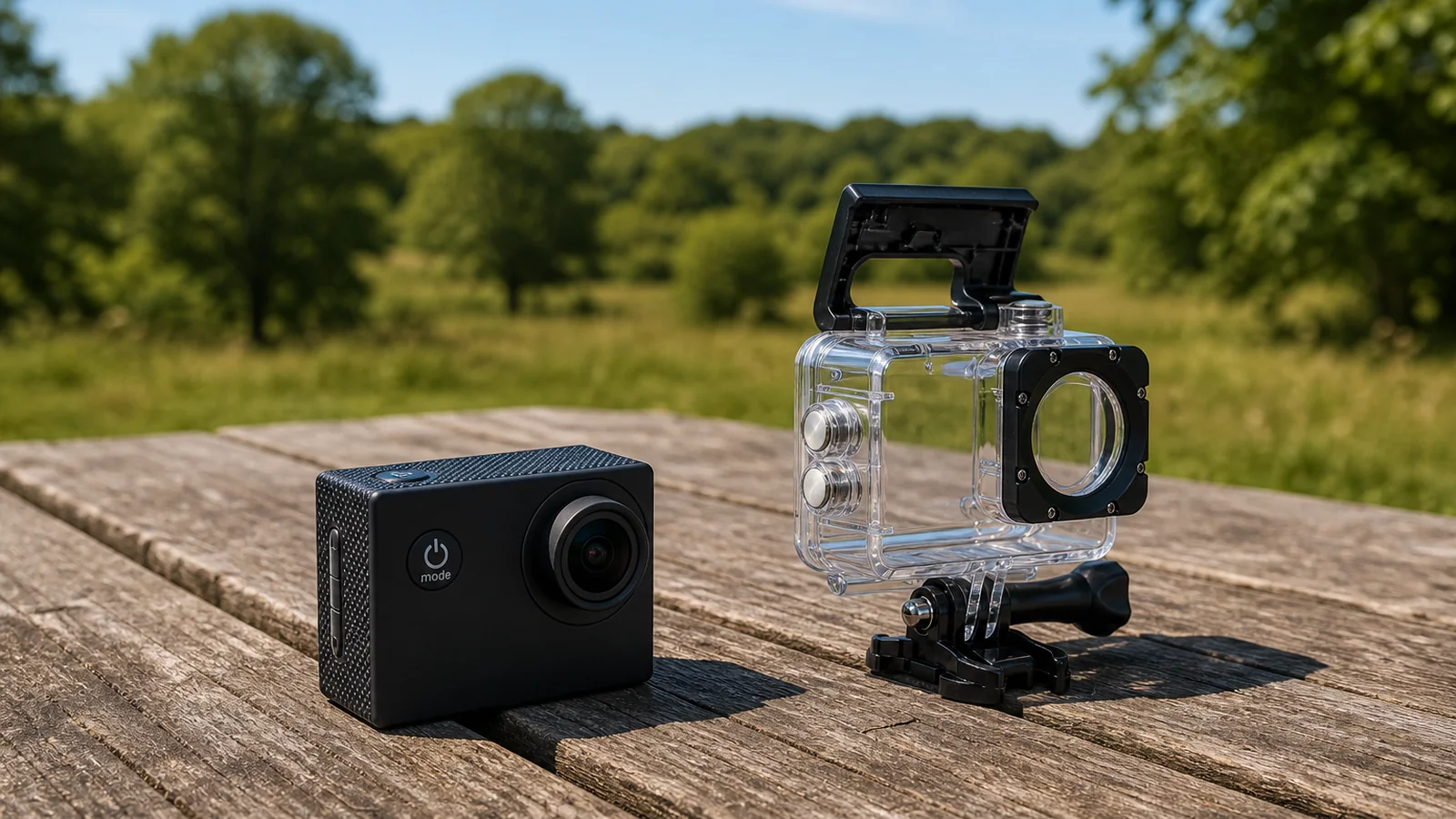
Leave the waterproof case on whenever the camera will go underwater and the housing is correctly sealed. On dry land—steady bike travel, indoor packing shots, or a dry coastal walk—you can remove the case for cooler running, clearer onboard sound, and fewer fogged windows, remembering that the bare camera body is not waterproof and must never be immersed. A 4K Wi-Fi action camera bundle such as the G200R includes a transparent waterproof housing rated to 30 m when sealed; that rating applies to the sealed shell, not to the body alone.
Underwater: housing is mandatory
For any swimming, snorkelling, or shallow dive use, fit the camera in the waterproof case, close every latch, and confirm the seal before entry. Correctly sealed, the housing is specified for depths up to 30 m. The camera body must not go into water on its own. If you need a wider UK overview of waterproof-camera choices and habits, see the waterproof camera UK guide; this article focuses only on when to keep or remove the shell on land versus in water.
On land with the case on: heat, audio, fog
Keeping the housing fitted on land adds a layer of physical protection and keeps the mount geometry familiar if you switch between wet and dry segments of a day. Trade-offs are real:
- Heat: The sealed plastic shell traps warmth. Long 4K30 or continuous clips in summer sun warm the camera faster than an open body. That can shorten comfortable recording windows on the single 900 mAh battery day.
- Audio: The closed case muffles voices and ambient sound. Travel commentary and café interiors sound duller than with the shell off.
- Fog: Moving between cool shade and warm sun, or packing a damp towel near the housing, can fog the front window. Wipe seals carefully; do not force a wet camera into a closed case.
None of these trade-offs change the underwater rule: if water is involved, seal the housing first.
On land with the case off: when it makes sense
Remove the housing for dry bicycle touring, indoor setup shots, or dry scenic stops where you want easier button access and clearer sound. The 2.0-inch IPS rear screen remains non-touch either way—menus still use physical buttons and the manual. You still get the fixed 140° lens, MP4 H.264 video modes including 4K30, and 16 MP stills.
Case-off does not mean weatherproof. Do not treat the bare body as safe in rain, spray, puddles, or accidental dunks. If showers arrive, stop recording, dry your hands, and return the camera to a properly sealed housing before any water contact—or pack the camera away dry.
Quick comparison
| Situation | Housing on | Housing off |
|---|---|---|
| Underwater / immersion | Required when sealed (up to 30 m) | Not allowed for the body alone |
| Dry bike travel / indoor | More heat, muffled audio, fog risk | Cooler, clearer sound; no waterproof claim |
| Mixed wet/dry day | Keep sealed whenever water is possible | Only while conditions stay dry |
| Drop / dust protection | Shell adds a barrier | Not guaranteed; handle carefully |
Boundaries
- Sealed waterproof housing: up to 30 m. Camera body must not enter water alone.
- Do not claim the bare camera is rainproof, splashproof, or waterproof.
- Housing on land can increase heat, muffle audio, and fog the window—plan breaks and wipe seals.
- Removing the case does not add touchscreen control; the 2.0-inch IPS screen stays button-driven.
- Single battery and USB-C charging limits still apply whether the shell is on or off.
FAQ
Can I leave the case on all the time for simplicity?
Yes for convenience, if you accept warmer running, quieter audio, and possible fog. Open the housing between sessions to dry the interior when moisture appears.
Does the case change the field of view?
The lens remains a fixed 140°. The window can introduce reflections or slight softness if scratched or fogged—keep it clean.
Is 30 m the same as leaving the case loose?
No. The depth rating assumes a correct seal. An unlatched or debris-blocked seal is not protected use.
For a kit that includes the waterproof housing with the camera, remote, and mounts, see the 4K Wi-Fi action camera bundle — a 4K Wi-Fi action camera bundle such as the G200R is built around a sealed housing for water, not a waterproof camera body.