Underwater Video Camera for Snorkelling: A UK Buyer's Guide
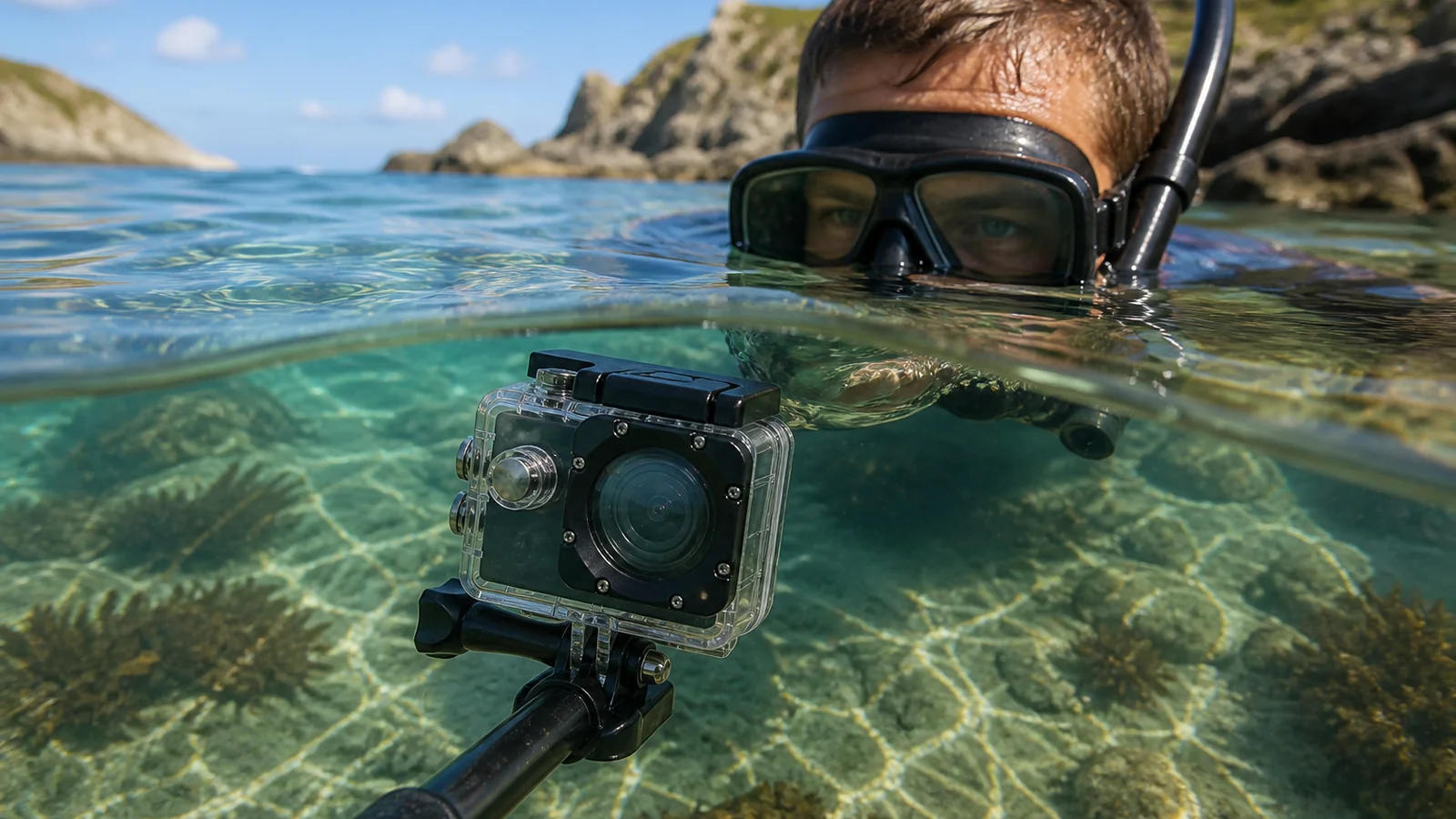
Quick answer: For UK snorkelling trips, the G200R bundle records 4K/30fps and can be used underwater only when correctly sealed inside its supplied 30m-rated housing. It costs £88.84 and includes one 900mAh battery, dual charger, mounting accessories, remote and a 64GB TF card. Test the empty housing in shallow water before the trip.
Snorkel depth is shallow — buy your housing deep
Recreational snorkelling happens in the top 5 metres; even confident duck-divers rarely pass 10. So why insist on a 30-metre case? Margin. A housing engineered for 30m is loafing at 3m: its seals tolerate repeated opening, temperature swings between beach and water, and the sand that finds its way into everything. Shallow-rated housings working near their limit are the ones that leak on the second trip.
The one non-negotiable: the camera body alone is not waterproof. The case goes on at the beach and comes off back at the accommodation — treat that as the rule and a first leak simply never happens.
The week-before checklist
Most snorkel-camera disasters are preventable in the kitchen a week before departure — which is exactly when most buyers are ordering kit against a countdown.
- Day 1 — bath test, empty. Seal the empty case, submerge it, look for bubble streams, then check the inside is bone dry.
- Day 2 — pool or bath test, loaded. Camera in, record ten minutes underwater, review the clip and the seal.
- Every wet day — O-ring check. Clean, unbroken, free of sand and hair; a single grain across the seal is how good housings fail.
- Card and battery. Format the included 64GB TF card in the camera, charge the single 900mAh battery and pack the dual charger.
- Practise the record check. The screen is non-touch. Use the housing's physical buttons or set up the recording before entering the water, then check the recording indicator.
Why colour disappears underwater — and what to do
Water eats light from the red end of the spectrum first, which is why unedited underwater clips look blue-green — and UK coastal water, rich in plankton and sediment, leans green with visibility that swings between 2 and 15 metres by season and swell. Three practical responses, in order of value:
- Stay shallow and close. At 1–3 metres on a bright day, most natural colour survives. Get within a metre of the subject — water between lens and subject is the enemy of both colour and sharpness.
- Work with the sun. Late morning to early afternoon puts light into the water; keep it behind or above you, and shoot slightly upward for the classic sun-through-surface look.
- Fix the rest in the edit. A small warmth and contrast lift in any phone editor recovers snorkel-depth footage convincingly. Set your expectations at "true to the swim", not tropical-documentary, and you will come home happy.
Cold water and batteries: plan for less
Cold water, 4K recording and Wi-Fi can reduce battery runtime. The bundle includes one 900mAh battery, with about 90 minutes of stated runtime under the 1080p reference condition, so plan sessions around the single battery and recharge it with the supplied dual charger. Use Wi-Fi transfers after filming to conserve power.
After the swim: the 30-second ritual
Salt is the long-term killer of underwater kit. Before the case is ever opened: rinse it sealed under a tap or in a bucket of fresh water, pressing each button a few times to flush the mechanisms, then dry it and only then open. Done after every sea day, the O-ring and latch stay factory-fresh; skipped for a week, salt crystals do quiet permanent damage.
Beyond snorkelling: kayak, surf and pool days
The same setup covers the rest of a coastal holiday. The mount kit straps the camera to a kayak deck or board; the tether goes on regardless, because boards and paddles launch cameras. In the pool, the case laughs at chlorine — rinse it after, as with the sea. If your buying question is really about family beach-and-pool kit rather than in-the-water filming, our waterproof camera UK guide is the better starting point; for the full market picture, see the best action camera UK buying guide.
Rent a premium camera or buy the bundle?
A fair question a week before a big trip. Premium action cameras genuinely shoot better low-light footage and smoother stabilised video — at several times the price, before the housing. For a snorkelling holiday filmed at 1–5 metres in daylight, that advantage shrinks to nearly nothing, while the £88.84 bundle price buys the camera outright, with the 30m case, the battery and the mounts already in the box, free UK delivery and 90-day returns. One good week of use and it has beaten a rental on cost; everything after is free.
Frequently asked questions
What underwater video camera should I take snorkelling?
The G200R records 4K/30fps and can be used underwater only when correctly sealed inside its supplied housing, which is rated to 30m. The bundle includes one 900mAh battery, dual charger, mounting accessories, remote and a 64GB TF card.
How do I know the waterproof case won't leak on its first swim?
Test it before the holiday: seal the empty case and hold it underwater in a sink or bath, check for bubbles, then repeat with the camera inside in a pool. Before each sea session, confirm the O-ring is clean, unbroken and free of sand or hair.
Why does my underwater footage look green or blue?
Water absorbs red light first, so below a few metres everything shifts blue-green — UK coastal water tends green. Stay shallow where colour survives, keep the sun behind you, and expect to warm up colours slightly when editing. At snorkel depths the effect is mild.
How do I start and stop recording with the case on?
The G200R has a non-touch screen. Use the housing's physical buttons or set up the recording before entering the water, then check the recording indicator.
How should I care for the camera after sea snorkelling?
Rinse the sealed case in fresh water as soon as possible, work the buttons while rinsing, and let it dry before opening. Salt left to dry is what corrodes latches and degrades O-rings — a 30-second rinse is the whole maintenance routine.
Verdict
Snorkelling footage is won by preparation, not spec sheets: a deep-rated case checked at home, a spare warm battery, the sun behind you and a rinse bucket at the end of the day. The G200R bundle supplies the hardware side of that list for £88.84. Do the bath test this week, and film the fish next week.